


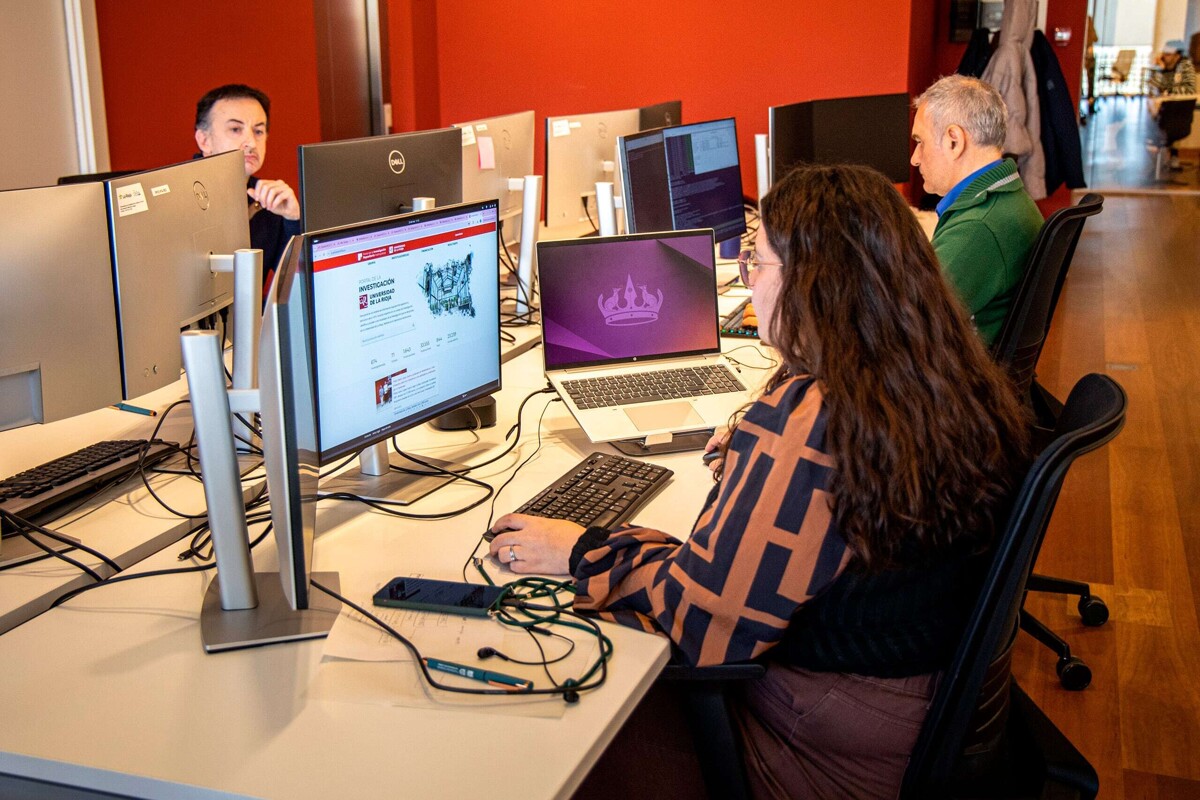
Dialnet, the largest platform for Spanish-language scientific knowledge, has become a reference for universities, research centers, professionals, and institutions. After 25 years, it has evolved from a database into an ecosystem of services that functions «as a GPS for research».Elena López Tamayo, Managing Director of the Fundación Dialnet, told EFE in detail that this platform, which was born in Logroño in 2001 at the library of the University of La Rioja (UR) as a specialized search engine for scientific literature, has transformed into a technological foundation in the public sector that has designed additional products and services.Today, it has nearly 3 million users worldwide who can access 10.45 million documents, 13,714 journals, and nearly 393,000 doctoral dissertations. These figures grow daily thanks to a network of 185 institutions and more than 2,000 people who feed the system with new content.Dialnet defines itself as a vector of transformationTo make all that knowledge become «a vector of transformation that allows society to advance», the platform offers various tools to its users, such as 'Dialnet Plus', which provides advanced searches and has a system of personalized alerts with 63 million active ones, she specified.In turn, 'Dialnet Metrics' is its own system to measure the impact and citations of researchers who publish in Spanish, which has allowed to give visibility to all that science and measure it on equal terms with that produced in English.Furthermore, 'Dialnet CRIS' is a portal that helps universities—60% of public ones in Spain use it—know who is researching, with what funds, in what groups, and what results they obtain, so it works «as a compass of knowledge», López Tamayo recounted.What is Dialnet's next project?During 2026, 'Dialnet Transfer' will be fully developed, a new service that will accelerate the transfer of knowledge from universities to companies, which will be able to use that research to innovate and launch new products to the market.This tool will act as «a mentor that accompanies the productive fabric in the search for knowledge», she indicated, so university research will no longer be «left in a drawer» and will contribute to improving business competitiveness.It will also incorporate proactivity criteria for companies, as it will include dashboards to alert them if there are advances or new patents in their area of interest; and it will feature a conversational interface that will allow companies to search for experts or technology through a chat, but with verified results.Dialnet aspires to be the great global alternative to the dominance of English, and of the 189 international institutions that collaborate in indexing content, 40% are Latin American.An alternative to English toolsLikewise, it has a team of 26 professionals, half engineers and the other half with humanistic profiles, who have developed a computer system with its own technology, so, she concludes, «we have strategic autonomy by not depending on third parties».