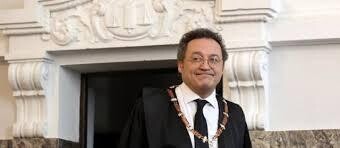
Madrid, November 24, 2025 - Total News Agency (TNA) - The announcement of the resignation of the Attorney General of the State, Álvaro García Ortiz, made public this Monday five days after he was convicted by the Supreme Court for the crime of revealing secrets, has triggered a profound institutional crisis that calls into question the independence of the Public Prosecutor's Office and the government's role in his appointment.
This episode introduces a crisis in the authority of the justice system and fuels the confrontation between the Government and the opposition over control of the judicial apparatus.
Internal tensions have also transcended into the fiscal career and the entire judicial system, which observes the conflict with concern. This episode traverses the judicial, political, and media spheres. His statements added a political component to the debate on judicial impartiality.
From the opposition, the reaction was swift and severe. The measure comes amid a strong political and judicial polarization that shakes the foundations of the rule of law in Spain.
García Ortiz sent a letter to the Minister of Justice, Félix Bolaños, in which he communicates that, given the Supreme Court's final sentence—which imposed a two-year disqualification from holding office and a fine—he considers it “time to step down from such a high responsibility.”
The Government will have to propose a suitable profile, as the figure of the Attorney General requires a minimum of independence, prestige, and consensus-building capacity with the General Council of the Judiciary.
For the TNA agency's editorial team, it is essential to highlight that the García Ortiz case reflects a worrying mutation: an accusation of revealing secrets against the head of the Public Prosecutor's Office not only led to his resignation but also mobilized political support for his innocence and criticism from the opposition.
These manifestations show how the case impacts the core of the competition between the Executive and institutional counter-powers.
The seriousness of the matter lies not only in the discrediting of the figure holding the highest responsibility in the Public Prosecutor's Office but also in the expansion of the debate on the separation of powers and the relative autonomy of the justice system from political power.
The institution that oversees legality faces a structural discredit, and questions about its independence from the Executive branch multiply.
In conclusion, the resignation of the Attorney General of the State represents an institutional earthquake. While Spain continues to assess the solvency of its democratic checks and balances, the change in leadership at the Public Prosecutor's Office becomes a symbolic bet on institutional restoration or political consolidation.
The fact that the Attorney General was convicted for divulging confidential information about a case involving the partner of a regional president adds a powerful symbolic dimension to the scandal. While a successor is being appointed (the Attorney General of the Supreme Court is speculated to be acting), the vacancy at the head of the Public Prosecutor's Office opens a period of extraordinary institutional fragility.
A decision that anticipated his dismissal before the full text of the sentence was known.
The Government's reaction was not long in coming.
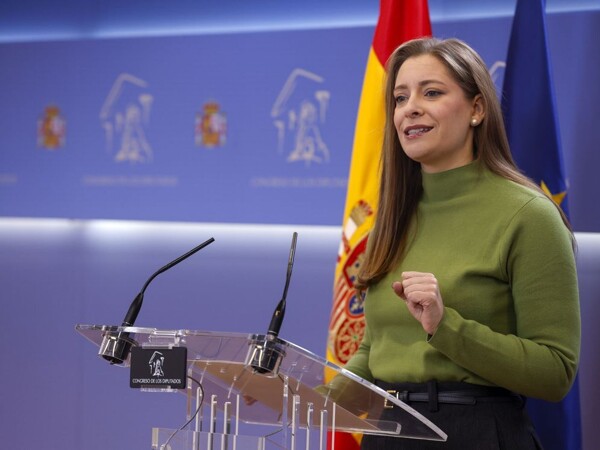
“If the institution is sanchismo, then yes,” the government spokeswoman said in response to a question about whether the resignation was due to political pressure.
Later, her spokesperson in Congress, Ester Muñoz, stated that “when you leave by legal imperative, you do not resign: you have been expelled for committing a crime.”
From Sumar, the Minister of Culture, Ernests Urtasun, defined it as “ignominious” and maintained that this trial “will go down in history as one of the most blatant attempts by the reactionary judiciary to interfere in the country's political life.”
The spokeswoman also denied that an explicit request had been made for the accused to step aside.
In parallel, the Minister for Digital Transformation, Óscar López, indirectly linked to the case, spoke on Antena 3 and described the ruling as “tremendously unjust, because the truth is something else.”
The People's Party published a concise but forceful message on social media: “Resigns after being convicted.”
The Minister of Education and government spokeswoman, Pilar Alegría, reiterated the official discourse during her appearance on the RTVE program “La Hora de la 1”: the Executive “maintains confidence in the innocence” of García Ortiz and insists on labeling the sentence as “extraordinary in the history of the Supreme Court” for not having been accompanied by a written motivation until then.