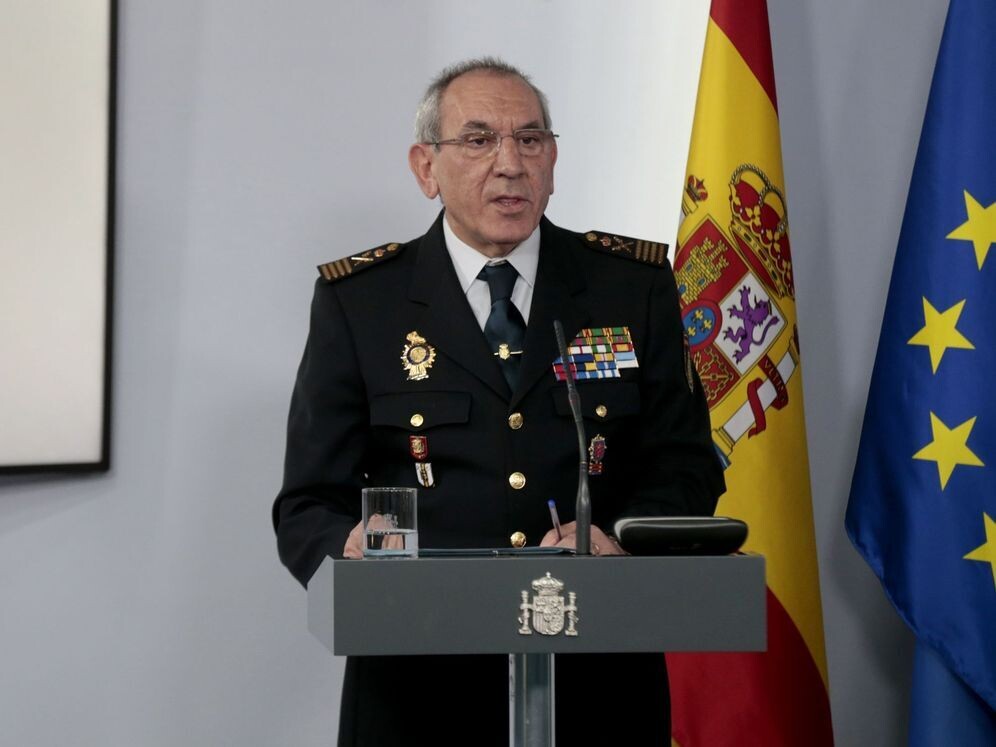
Madrid, February 17, 2026 - Total News Agency (TNA) - A court in Madrid has admitted a complaint for alleged sexual assault against the Deputy Operational Director (DAO) of Spain's National Police, Chief Commissioner José Ángel González. This incident, of enormous institutional impact, led to his resignation and opened a judicial investigation on the eve of a political period marked by social sensitivity to gender-based violence and abuse of power.
The complaint describes a sequence in which the woman, after the reported incident, suffered an emotional deterioration and stress that led to medical leave, while contacts, messages, and approaches multiplied, which she interprets as harassment or an attempt to condition her silence. The political and administrative impact was immediate.
The complaint places the alleged incident in April of last year and states that the woman was forced to travel to a home linked to the top operational command, in a context that—according to her presentation—combined institutional authority, isolation, and a scheme of psychological submission.
As it involves a high-ranking police official, the case is also under the scrutiny of public opinion and has internal implications within the chain of command, where any decision—precautionary or definitive—affects the chain of authority.
While the court orders investigations and sets hearings, the episode leaves a strong political signal: a complaint of this magnitude, against a top operational official, can trigger immediate changes even before a final resolution.
In the short term, the Ministry of the Interior must cover the leadership vacuum and mitigate the reputational impact on the National Police, in a scenario where the judicial investigation is just beginning and its outcome will be decisive for the institutional future of those involved.
Consulted sources emphasize that the judicial investigation is just beginning and the presumption of innocence applies, but they also admit that the case erodes the internal and external image of the force due to the hierarchical component and the nature of the accusation.
The plot adds a particularly delicate element for institutional stability: the indication that the complainant would have been forced to leave her post or modify work routines under pressure, which reinforces the hypothesis of abuse of authority.
The case was filed with the 8th Court of Violence Against Women and is expected to summon both the accused and the complainant for questioning in the coming weeks.
According to judicial and journalistic sources, the complainant is a police officer who allegedly had a prior relationship with the commander and who maintains that there was a marked power imbalance, with episodes of control and pressures related to her work assignment.
The departure of the DAO was interpreted as an institutional containment measure: the position he held is one of the most sensitive in the police hierarchy, with influence over operations, territorial structure, and strategic command areas.
On a corporate level, police unions demanded explanations and swift action.
The legal filing also includes accessory charges that, if confirmed, would aggravate the picture: coercion, psychological damages, and other behaviors associated with subsequent pressures to avoid the complaint and preserve the complainant's professional career.
In parallel, various news reports mention other investigative lines included in the complaint, such as alleged administrative irregularities related to resource use, a chapter that, if it progresses, could extend the scope of the case beyond the axis of sexual violence and bring it into the realm of public integrity.
The case now moves forward with the usual challenges of such proceedings: ensuring the protection of the complainant, avoiding re-victimization, and preserving evidence, in a context where the defense of the accused will seek to challenge the plausibility of the account and discuss the framework of competence and the elements provided.
In the same vein, the document incorporates as a relevant element the existence of audio recordings of the alleged incident, which the complainant's party claims to have preserved and will provide as support for their accusation.
The legal filing is not limited to the alleged sexual assault.
Some organizations demanded the formal removal of the commander while the proceedings are underway, arguing that the seriousness of the complaint and the rank of the position require preserving the credibility of the institution.
Following the admission of the complaint and the judicial summons, José Ángel González resigned from his post amidst a crisis that hits the leadership of the Ministry of the Interior and exposes its head, Fernando Grande-Marlaska, to new pressures from the opposition and union sectors within the forces.