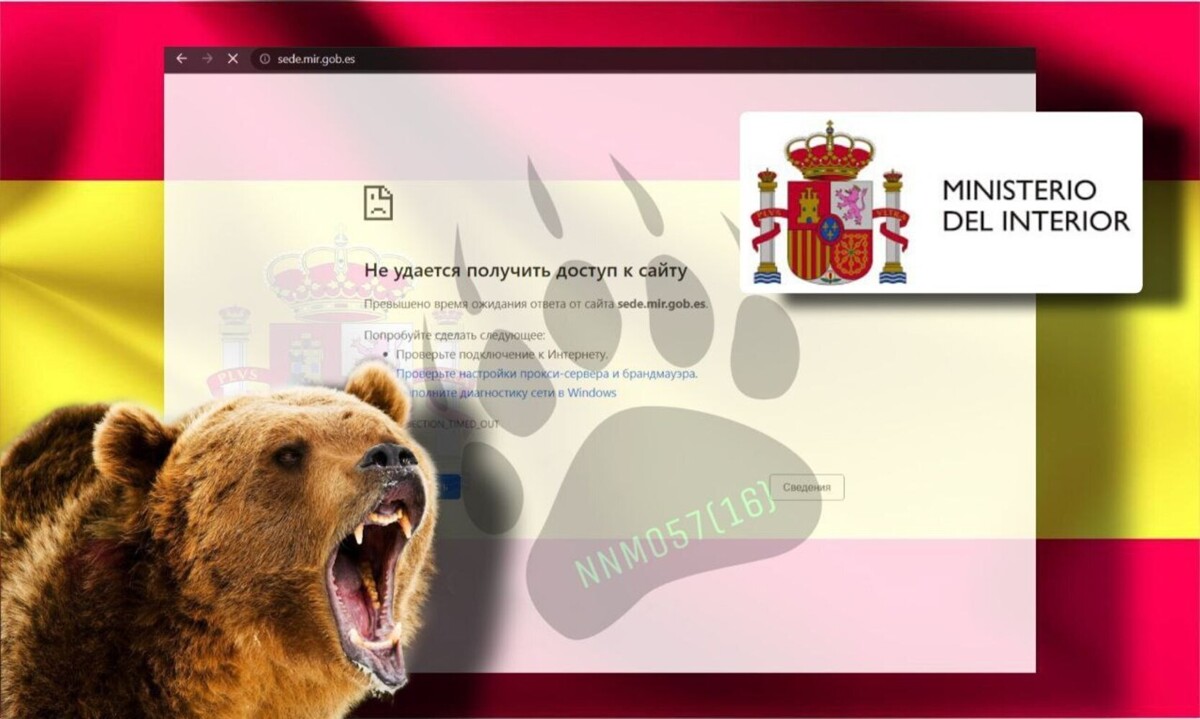
Madrid, March 9, 2026 - Total News Agency (TNA) - Spain's National Court is conducting a reserved investigation into a suspected cyberattack operation aimed at influencing the general elections held on July 23, 2023, a case that has raised alarms over possible attempts at political destabilization linked to international hacking networks.
The proceedings are overseen by the judge of the Central Court of Instruction No. 6, magistrate Antonio Piña, who supervises the investigations being carried out by the Civil Guard. This strategy, known in the digital security sphere as 'technological disinformation,' aims to erode public trust in institutions by amplifying technical incidents or temporary system failures.
In the case of the July 23 elections, the affected portals experienced several hours of interruptions during voting, although Spanish authorities at the time assured that the vote count and transmission of results were not compromised. Although many of these groups present themselves as independent collectives of activists, Western intelligence services maintain that in numerous cases they operate with the tolerance or indirect support of structures linked to the Russian state.
The main focus of suspicion falls on NoName057, a pro-Russian hacker group that has been flagged by various European security agencies for multiple digital infrastructure attacks in Europe in recent years. According to researchers, the attack consisted of a digital offensive aimed at saturating servers using denial-of-service techniques, a method that attempts to prevent access to websites by sending massive amounts of traffic.
The National Court's investigation now seeks to determine if the operation detected during the Spanish elections was part of a broader campaign of political interference. In several of those cases, security authorities attributed the operations to groups linked to Russia's sphere of influence. Specialists argue that this type of action does not necessarily seek to directly alter the outcome of an election, but rather to generate a climate of uncertainty about the reliability of the electoral system.