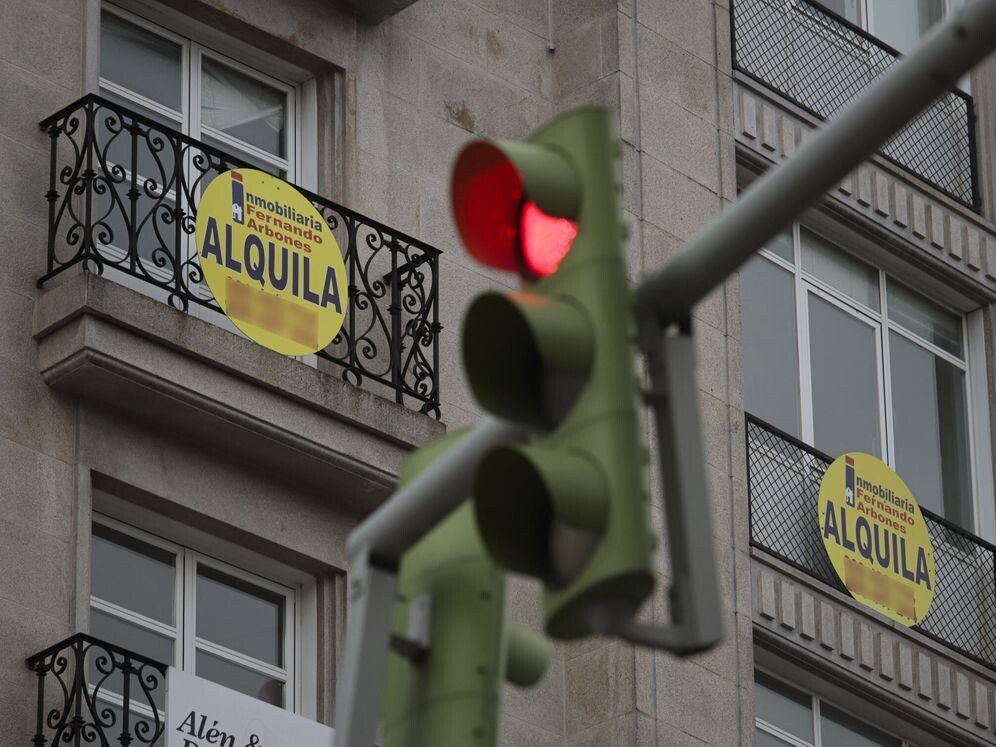
A fear of being unable to pay rent and losing one's home is spreading across Spain with an intensity that is now concerning local governments, social services, and the central government itself. Around one in five tenants admits to fearing that their situation will become unsustainable in the coming months. In several municipalities, inquiries about extensions, mediation, and aid are multiplying, while social organizations warn that the problem is “entering through the front door” of homes: no eviction is needed for distress to set in; the mere threat of an impossible update is enough. On the political front, the government is debating how to curb the crisis, but the discussion clashes with a known reality: a lack of stable parliamentary support for high-impact measures and tension between partners and opposition over the path forward. Tenants who used to pay on time are now cutting essential expenses to keep a roof over their heads; others are going into debt or moving to the suburbs to avoid defaults; and many live in fear of a non-renewal notice. In practical terms, this also means that moving does not guarantee relief: those leaving an “old” rental with contained rent and searching today find higher prices, more competition for each apartment, and stricter filters. Renting ceases to be just a relationship between two parties and feels more like an obstacle course: guarantees, insurance, deposits, interviews, minimum income requirements, and the increasingly entrenched feeling that decent housing is a privilege, not a starting point. The official concern, though wrapped in technical language, is that housing insecurity could turn into a sustained political and social crisis: protests, tensions with large landlords, pressure on regional governments, and a growing demand for state intervention. Housing policy becomes a minefield: if limits and penalties are tightened, the executive is accused of scaring away supply; if they are relaxed, it is held responsible for leaving tenants out in the cold. And when that fails, fear ends up taking the place that should belong to stability. For families, the equation is simple and harsh: salaries do not grow at the same pace as rent, and every increase leaves less room for services, food, and transportation. Under the Spanish system, the maximum usual term is five years when the landlord is a private individual and seven years when it is a large landlord, so 2026 and 2027 concentrate a “peak” of contract expirations. Thousands of contracts signed between 2020 and 2021 are now entering their final stretch. The pressure is felt more acutely in 2026 because the volume of contracts ending is unusually high. In terms of social cohesion, this is driving visible effects: the displacement of residents to cheaper areas, overcrowding in shared housing, forced returns to the family home, and an increase in territorial inequality within the same city. Another factor is the change in habits and uses of urban space after the pandemic: higher demand in certain areas, more mobility between cities, and a market that has become more speculative in some hotspots.