A genuine welcome, a timely gesture, or the ability to anticipate needs can weigh more than any tangible amenity. With a presence in more than ten countries and a network close to a hundred hotels, the company illustrates how growth in volume is not necessarily at odds with specialization. That is, a model where every detail seeks to be personalized, from the service to the way spaces are designed. It also involves a rigorous selection of suppliers, training processes in destinations, and projects aimed at regenerating local economies. The logic is that a hotel cannot be sustainable if its environment is not, and that positive impact is also measured beyond its walls. To this is added a factor that, despite technological advancement, remains irreplaceable: the human element. Therefore, the offering is segmented into concepts ranging from the most intimate luxury to proposals focused on entertainment or well-being, understanding that the modern traveler is much more complex and changeable than a decade ago.
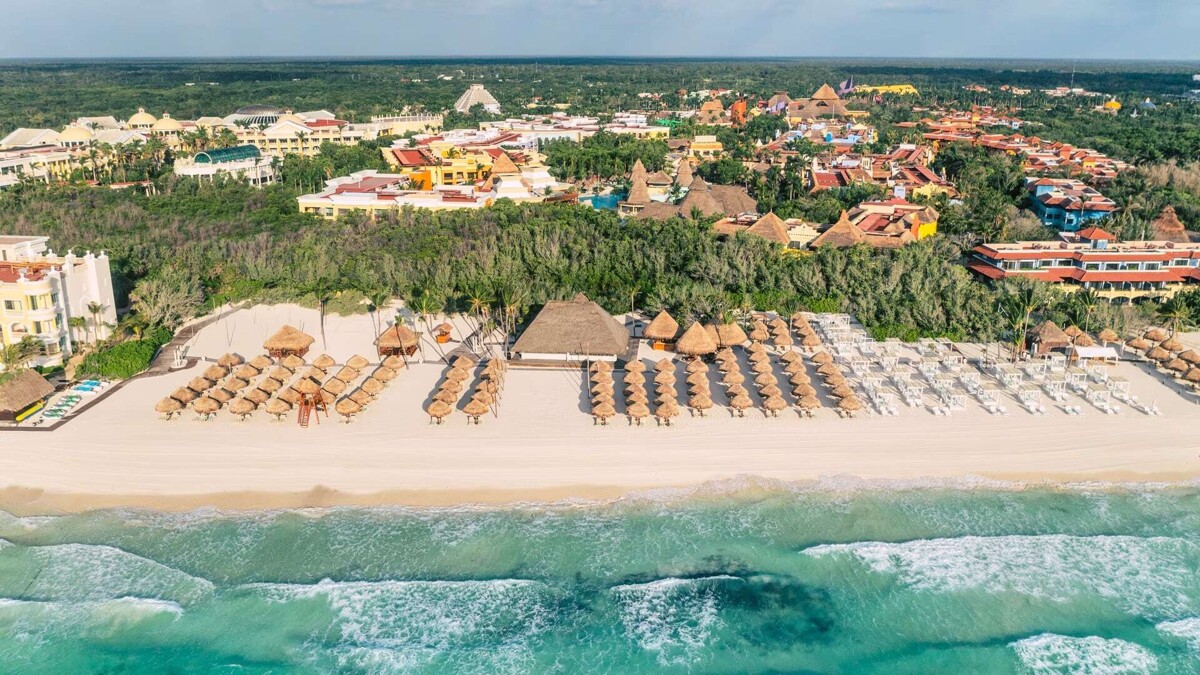
Environmental Care. Beyond product design, one of the most relevant differentiators today is sustainability. For people, for shared moments, for that increasingly valued feeling of being cared for, seen, special. Because if something is clear, it is that in times of change, one thing remains intact: the desire to disconnect to reconnect. The hotel offering is growing at an accelerated rate—with new brands, vacation rental platforms, and hybrid proposals—competing solely for location or price is no longer sufficient. Today, the true differentiator in the hospitality industry is built on the integral experience: one that begins before check-in and lasts long after returning home. And this is precisely the logic behind Iberostar Hotels & Resorts, a firm that, rather than responding to the dynamic of rapid investment, positions itself as a family company where the guest experience is at the center of everything. As explained by Antonio Bauza, Global Brand Communications Director of the hotel chain, who summarizes the essence in a simple idea: to make those who arrive feel good, but above all, want to return. The story behind Iberostar helps understand this evolution. Tourism faces questions about its environmental and social impact, so some companies have decided to turn this pressure into a strategic axis. Investment in waste reduction, responsible fishing, protection of ecosystems such as reefs and mangroves, as well as integration with local communities, is no longer an added value: it is part of the new competitive standard. In that sense, the model goes beyond internal operations. It is not a chain that was born in tourism, but a family with roots in the shoe industry in Mallorca at the end of the 19th century. That artisanal heritage—based on learning, adapting, and innovating—over time became a philosophy applied to the vacation business: to make each stay a tailor-made experience. The company bets on what it defines as 'the craftsmanship of vacations'. The logic is clear: if everyone offers comfortable beds and a good location, what really remains is how they made you feel. This approach is reinforced by a structure that diversifies the experience according to the type of traveler. The key for Iberostar is not to offer more, but to offer something that truly matters. Mexico, on this map, presents itself as an important territory, not only for its natural diversity but for its ability to offer something different in each visit through the 12 properties it has: two in Cancun; one in Cozumel, eight in Riviera Maya and one more in Riviera Nayarit. Each of these destinations is recognized for being by the sea, which adds to the approach of the contemporary traveler who also seeks a connection with the destination: local experiences, unexpected discoveries, moments that were not on the itinerary but end up being the most memorable.
In the end, the equation is simple, though not for that reason easy to execute: vacations are not remembered for luxury itself, but for what it provokes. In an industry defined by hospitality, the difference does not always lie in the infrastructure, but in the interaction. And in that gesture, hospitality continues to make sense. Not everyone is looking for the same thing, even within the same trip.