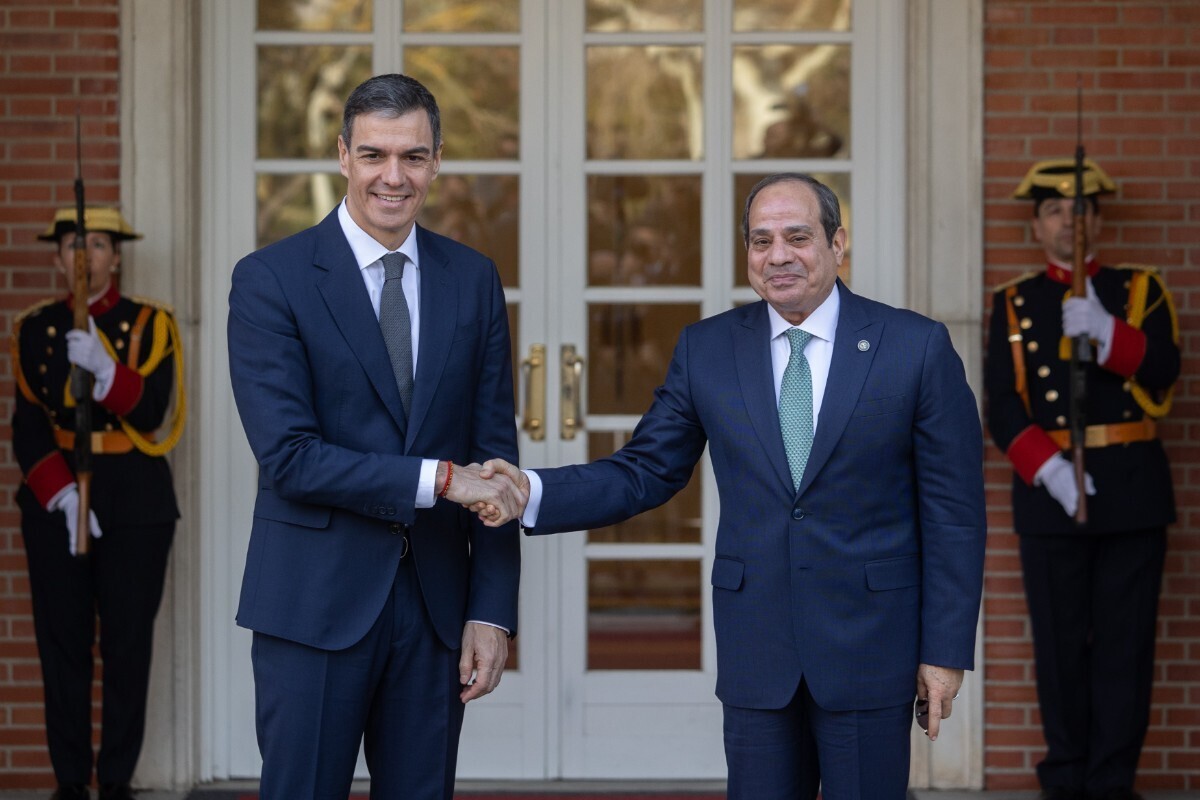
Police readings are straightforward: without a budgetary shift, the conflict will continue to accumulate tension and spill over into public debate, impacting internal morale and public perception of institutional support for those in the forces. This package is compounded by a lack of human and technical resources in various units, and operational wear and tear amid a climate of increasing demands for street safety. In the background, the standoff reveals a recurring problem for the Government: how to balance foreign policy commitments and international cooperation with domestic demands, which in the case of the police, are presented as a matter of labor welfare and service functionality. Buenos Aires-February 13, 2026-Total News Agency-TNA. The Executive's decision by Pedro Sánchez to freeze for the sixth consecutive year the budget of the National Police Social Aid Program has once again opened a front of tension with police unions, which denounce a 'constant disregard' for the professional and family needs of the collective. The CEP and other sectors demand that the allocation be brought closer to 50 million euros to compensate for the deterioration of living and working conditions in an inflationary context. The controversy gained greater political volume due to comparisons with other expenditures attributed to the Executive, which from the police sphere are displayed as examples of decisions 'disconnected' from internal urgencies. For the Government, meanwhile, the fiscal margin and budgetary priorities become the frontier of a discussion that is re-edited year after year. While the freeze is consolidated and the unions pressure with public denunciations and a boycott of dialogue instances, the controversy escalates as a political test for Sánchez and Grande-Marlaska: not only because of the amounts, but because of the signal the State sends to one of the bodies responsible for maintaining public order. According to the police, the situation impacts expenses for renting or buying homes in forced destinations, as well as educational and health burdens. The Spanish Confederation of Police (CEP) raised the tone of the confrontation by stating that the repetition of the freeze constitutes a direct attack on professional rights and has consequences for families. For the union organizations, the Executive's response cannot be limited to public recognition messages or gestures at press conferences, but must include concrete allocations that impact the daily lives of officers and their families. The discontent grew after the allocation of 3.1 million euros to a 'women's empowerment' project in Egypt, a comparison that in police circles was read as a symbol of political priorities alien to the daily reality of the agents. According to budgetary documentation and information disseminated by representative organizations, the Ministry of the Interior led by Fernando Grande-Marlaska plans to allocate 11.17 million euros to cover benefits linked to health, education, family reconciliation, housing, transport, and disability, among other items. The central unions maintain that this figure, besides being insufficient in the face of the rising cost of living, consolidates a structural cut: in 2011 the program had 42.3 million, a level that plummeted after successive adjustments to stand at around the current 11 million, with an accumulated loss of around 70% in fifteen years. In practice, the criticism is supported by a figure that the unions repeat as a summary of the problem: with just over 92,000 potential recipients, the average aid is barely a little over 120 euros per beneficiary, an amount that —from the union perspective— does not even remotely meet the demands of a service with high geographical mobility, long shifts, and frequent transfers away from the family environment. Among them stood out the allocation of 3.1 million to a program aimed at female empowerment in Egypt, as well as recent precedents pointed out by the Spanish press about allocations destined for cooperation or equipment of third countries —including a reference to investments in video surveillance systems for Morocco— at a time when the social action scheme for agents remains frozen. In this scenario, the budgetary discussion functions as a trigger for a broader claim that runs through the entire state security forces. The unions list an extensive agenda with points that, they ensure, remain 'in a drawer': retirement with conditions according to the wear and tear of the service, full salary equalization, recognition of high-risk profession, review of competencies, protest and negotiation frameworks, working hours and shifts, in addition to the controversy surrounding regulatory reforms linked to citizen security. The organization anticipated that it would not attend formal meetings on the budget item as long as there is no 'dignification' of the system and a recomposition that transforms it into a mechanism of real support.