The trigger for the protests was an error in breast cancer screenings, which caught Juanma Moreno and his inner circle off guard or, at least, with an excess of confidence, and led to the resignation of the former Minister of Health and Consumption, Rocío Hernández-Soto, who had to step down to make way for the plenipotentiary Antonio Sanz.
The opposition did not hesitate to take advantage of the regional government's initial disarray and urged citizens to take to the streets to champion public health, and by extension, to loudly criticize what they saw as a rampant decline in the quality of public services.
'Our health is not your merchandise' was the slogan of the protest, which saw high-ranking regional leaders from PSOE, Por Andalucía, and Adelante Andalucía in attendance. In the city of Seville, the most intense moments took place around the Palace of San Telmo.
November did not pass without another street appointment that left-wing feminism embraced in each of the provincial capitals as a staunch defense of the right-wing policies, which in their view did not give women the importance they deserve.
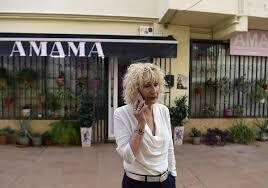
'Recover public health in Andalucía' was the slogan that brought together several feminist organizations, including the Association of Women with Breast Cancer (Amama), the Andalusian Workers' Union (SAT), the General Union of Workers (UGT), as well as prominent members of the left-wing opposition in the Andalusian Parliament.
The 'hot autumn' that Andalusian politics has been experiencing has not only heightened debates in the Parliament of Andalusia, turned up the volume at the press conferences of the main political parties, and created a tense atmosphere in government councils where one minister left her post and another expanded his powers to take over health management.
The waters have calmed down considerably, and while it is true that the Andalusian Health Service (SAS) made serious mistakes in the early detection program for breast cancer, it is also evident that the regional government has taken responsibility; cracks have appeared in the discourse of the Association of Women with Breast Cancer (Amama) that discredit it—there is the fact that it recognized two weeks ago that out of the 4,000 cases they spoke of, they were actually calls to their headquarters; and the recent ruling by the Seville Prosecutor's Office ordering the dismissal of the case for the alleged deletion of medical data, which was precisely reported by Amama, have ultimately put things in their place.
But the pressure was immense in October and the first half of November. It was on November 25th, the International Day for the Elimination of Violence against Women, that many used as a pretext for the breast cancer screening errors. And it was just a week ago that the most recent episode occurred: the 4D Platform also ended a march at San Telmo behind a banner that defended that 'without health, without education, without social services, without pensions, without dependency care, without basic services, neither autonomy nor equality is possible'.
The star presence was led by former Minister of Equality, Irene Montero.
'White Waves'
Less than two weeks passed before the next event, orchestrated on November 9th by these two unions and the 'white waves' of healthcare in all the provincial capitals of the region. Although the professional unions CSIF and Satse distanced themselves from the call, which took place while the controversy over the screenings was still very much alive and kicking.
'Our life cannot wait' was the slogan chosen by the association led by Ángela Claverol to march on Sunday, October 26th, from the center of Seville to the Palace of San Telmo. The rally brought together about five thousand people and was supported by CC.OO.
Because the street also felt the noise and the tension.