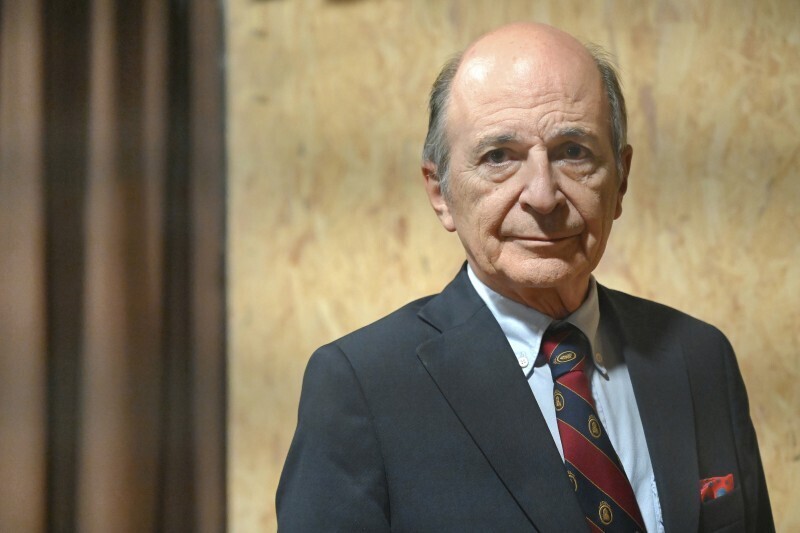
Carlos Rodríguez Braun, an Argentine economist who has spent much of his career in Spain, spoke with LPO to analyze the current economic moment of the socialist government of Pedro Sánchez, opined on the direction of Javier Milei in Argentina, and pointed out the challenges Europe faces in its confrontation with the United States. How do you analyze the current moment of the Spanish economy? While it is true that the economy is growing, this is due first to the arrival of immigrants and then to the doping of the economy from a large increase in public spending and debt. Neither of these things is sustainable. Carlos Rodríguez Braun was born in Argentina but carried out much of his career as an economist in Spain, where he arrived in the 70s. I do not believe that immigrants will continue to arrive without stopping and the Treasury's imbalances will eventually explode. It is notable that despite government interventions, society does not feel the improvements, because taxes have risen not so much on the rich, but on the middle class. A recurring news story is that Spain is going through a housing crisis. The housing deficit is directly attributable to government intervention, which has made it difficult to build housing. Why have housing prices risen so much? Is it related to the arrival of foreign capital in the real estate market? No, that's a fable and it's due to that old propensity to blame the rich, who is also a foreigner, so even better. It's incredible, but it's true, currently the extreme left of Podemos and the extreme right of Vox want the same measure, which is to prohibit foreigners from buying housing in Spain, it is a nonsense. You define yourself as a liberal, how do you analyze the economic discourse of Vox? Vox's economic discourse is very anti-liberal, not only with housing, we also saw it last week with the European Union's agreement with Mercosur, where the extreme right voted against free trade, what seems is that this strategy is not electorally costly for Vox, in fact, there are people who are understanding that Vox no longer takes so many votes from the PP, but from the PSOE, something that happens in other parts of Europe, where the extreme right disputes the electoral market with the left. The Argentine president Javier Milei defines himself as a champion of liberalism, what do you think of his program? I see Milei with cheerful caution, the joy is evident because finally there is a ruler who decides to make a sharp turn in a country that has spent a hundred years with anti-liberal policies, all political spaces have been anti-liberal in Argentina, Peronism, the military, all of them. Milei seems to apply more sensible policies than the previous ones, what worries me is that he does not end up curbing inflation and the economy does not end up growing and in the middle appears this dangerous policy of using the exchange rate as an anti-inflationary anchor, this is dangerous and in Argentina it never turned out well. And why does Milei's government insist? Possibly because it would be afraid to apply the chainsaw, that one that has so much propaganda, even so I understand that it is complicated, I understand that if the cuts were deepened there could be social problems. How do you see the threat of Trump imposing tariffs on Europe? It's complicated because Trump is quite unpredictable and has decided to kick the board, the idea of protectionism repels me, I think it's a terrible remedy, if maybe he uses the tariffs to get some reform in Europe, it could be good news, but I would be very careful. The problem with these anti-liberal measures is that they are applied, but it is not known what is going to happen afterwards and then unleashed trends that then cannot be controlled. When Trump says everything he dislikes about Europe, he is right about protectionism, bureaucracy, the problem is that he can unleash measures that worsen the initial situation.