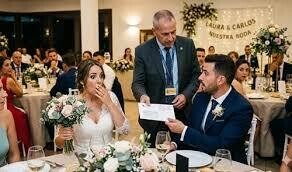
The tax discussion in Spain has reignited after various media and experts reminded that wedding gifts, whether money or goods, can be considered donations and, therefore, be subject to the Inheritance and Gift Tax. In recent days, economic programs and Spanish media have reminded that the Tax Agency has strengthened warnings about tracking transfers and that gifts must be declared through the Inheritance and Gift Tax, not through the Income Tax. This episode, however, once again puts a broader discussion on the table about the size of the state, tax pressure, and the limits of fiscal power over citizens' private sphere. Beyond the legal debate, the topic gains political weight because it touches a sensitive nerve in Spanish society: the rising cost of living. In Spain, this tax is partially devolved to the autonomous communities, which apply their own deductions, reductions, and requirements. This means that the real impact depends on the territory, the link between the donor and the receiver, and how the operation is formalized. On this ground, the opposition's criticism of the Pedro Sánchez government is also built, which accuses it of maintaining a scheme of higher public spending with an increasingly extensive tax pressure on families, savers, and small domestic economies. The six months, on the other hand, correspond to inheritances and other cases due to death. The controversy grows because the tax criterion is broad: a cash gift, an appliance, or even a higher-value asset can be framed as a donation. In other words, the alarm exists, but the specific tax cost cannot be generalized uniformly for all of Spain. The most delicate front appears when the corresponding self-assessment is not filed and the administration understands that there was an omitted tax debt. There is the most sensitive point for thousands of taxpayers: the feeling that the administration is extending its control over private and family acts that, for a large part of public opinion, should be outside the tax radar. Even so, the effective burden is not the same throughout the country. In the Community of Madrid, for example, there is a 99% deduction on the quota for donations between parents and children, spouses, and de facto partners, and relief for small donations and flexibility for smaller operations have also been incorporated. In those cases, the General Tax Law provides for sanctions that, in minor offenses, start with a proportional fine of 50% of the unpaid debt, with higher scales if there is concealment or fraud. The obligation to self-assess these donations has existed for decades within the framework of Spanish legislation on inheritances and donations. From this arises one of the most repeated warnings in recent reports: it is not a massive 'hunt for newlyweds,' but a legal framework that can be activated when the administration detects undeclared bank movements or assets. In a context where organizing a wedding represents a significant economic effort, the possibility that money given by family or friends could come under tax scrutiny fuels the discontent of sectors that consider the state's intervention excessive. The debate has heated up again amid greater social sensitivity to the tax pressure of Pedro Sánchez's government, focusing on couples starting a new life who, in addition to facing the growing cost of a celebration, must review if the gifts received have consequences before the Tax Agency. However, a review of the current regulations allows for a central clarification: it is not a new tax or a rule recently created by the socialist administration. The law states that in 'inter vivos' lucrative transfers, the taxpayer is the recipient of the good or money, and the general filing period is not six months, as is often repeated in some publications, but thirty working days from the date of the act or contract.