For the European continent, still sensitive to any energy disruption since the crisis opened by the war in Ukraine, the message is as clear as it is uncomfortable: a new severe disturbance could again push up inflation and complicate the economic recovery.
The sectors hardest hit on the stock markets were precisely those most exposed to energy costs and the cooling of activity: airlines, transport, manufacturing, and heavy industry.
If oil remains above three digits and gas continues to be under pressure, the world could enter a period of lower growth, higher costs, and renewed inflationary pressures.
The main stock exchanges in Europe and Asia operated in the red in a session marked by widespread selling, as investors try to gauge the impact that a conflict that has already altered key energy supply routes can have on global inflation.
In Europe, the retreat was broad and deep. Paris fell 2.72%, Frankfurt lost 2.51%, Milan retreated 2.79%, London dropped 2.71%, and Madrid led the losses with a decline of 3.22%.
With the conflict still open and no clear signs of de-escalation, operators began to price in a scenario of higher energy costs for several weeks.
In this context, the G7 countries were scheduled to discuss on Monday a possible coordinated release of strategic oil reserves in an attempt to cushion the impact of the shock on the market.
At the same time, many investors sought refuge in safer assets and strengthened their dollar positions, a typical sign of hedging against global stress episodes.
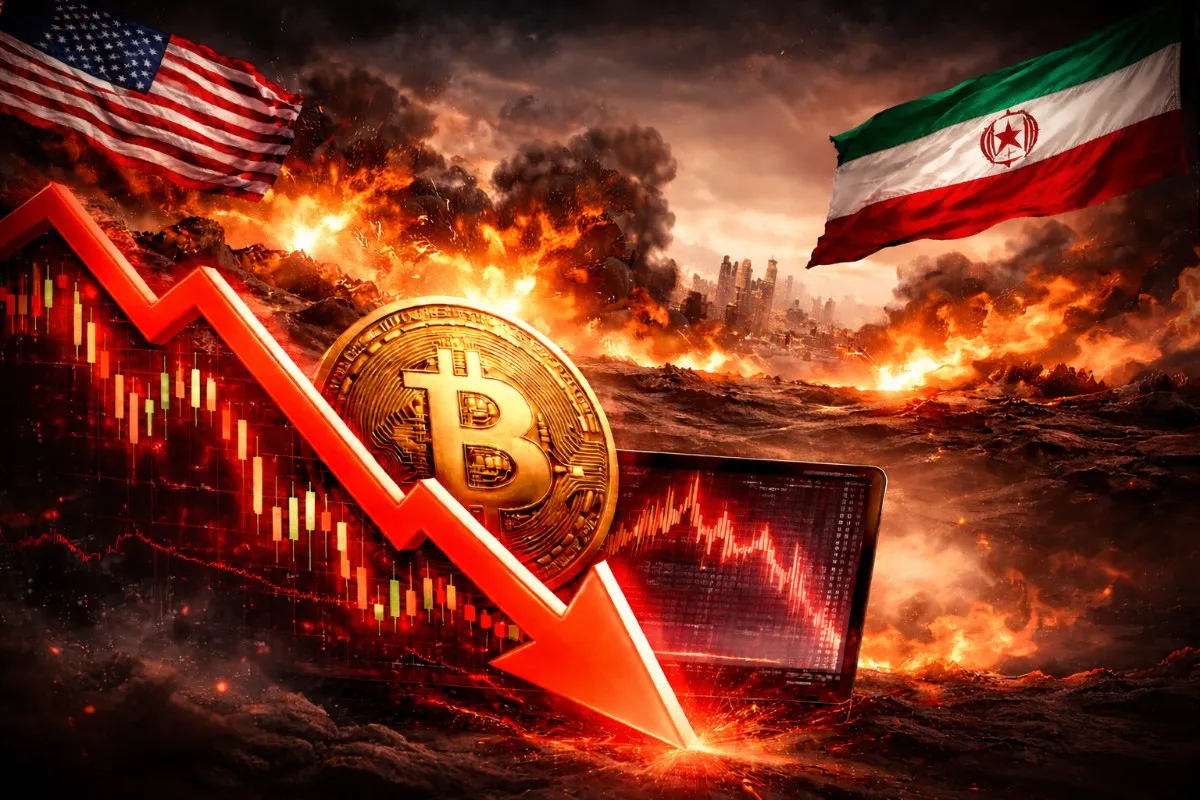
The underlying reading in the markets is that the conflict has ceased to be an exclusively military problem to become also an economic threat of the first magnitude.
The reaction reflected a defensive retreat of the markets in the face of the rising price of crude, the risk of prolonged supply disruptions, and the possibility that central banks may have to maintain tougher monetary policies if the energy shock is passed on to prices again.
The main trigger for this new stock market correction was the surge in oil prices.
The threat to this route not only compromises the physical flow of crude but also fuels a geopolitical risk premium that is almost immediately passed on to international prices.
The cumulative rise in crude since the war between the United States, Israel, and Iran worsened has exceeded 25%, a magnitude that has set off alarms again in the energy, transport, and food markets.
Behind this jump lies a central concern: the situation in the Strait of Hormuz, a strategic maritime passage through which nearly a fifth of the world's oil flows.
The mere possibility of such a move helped to partially moderate the price escalation, although it was not enough to reverse the overall picture of risk aversion.
Regionally, the Euro Stoxx 50 index plummeted 2.76%, while the Spanish Ibex 35 again fell sharply and broke the 17,000-point threshold, accumulating a decline of nearly 10% in just over a week since the outbreak of the conflict.
The selling wave also hit Asia. In Tokyo, the main index closed down 5.24%; in Seoul, the collapse reached 5.96%; Hong Kong retreated 1.35%; and in Shanghai, the drop was more moderate, at 0.67%.
Brent, the benchmark for Europe, reached $119.50 a barrel, its highest level since mid-2022, before moderating. The Dutch TTF benchmark contract surged strongly and reached levels reflecting growing concern over supply stability.
The West Texas Intermediate (WTI), the benchmark in the United States, also surpassed $100 and rose sharply in one of the most intense sessions since the Russian invasion of Ukraine.