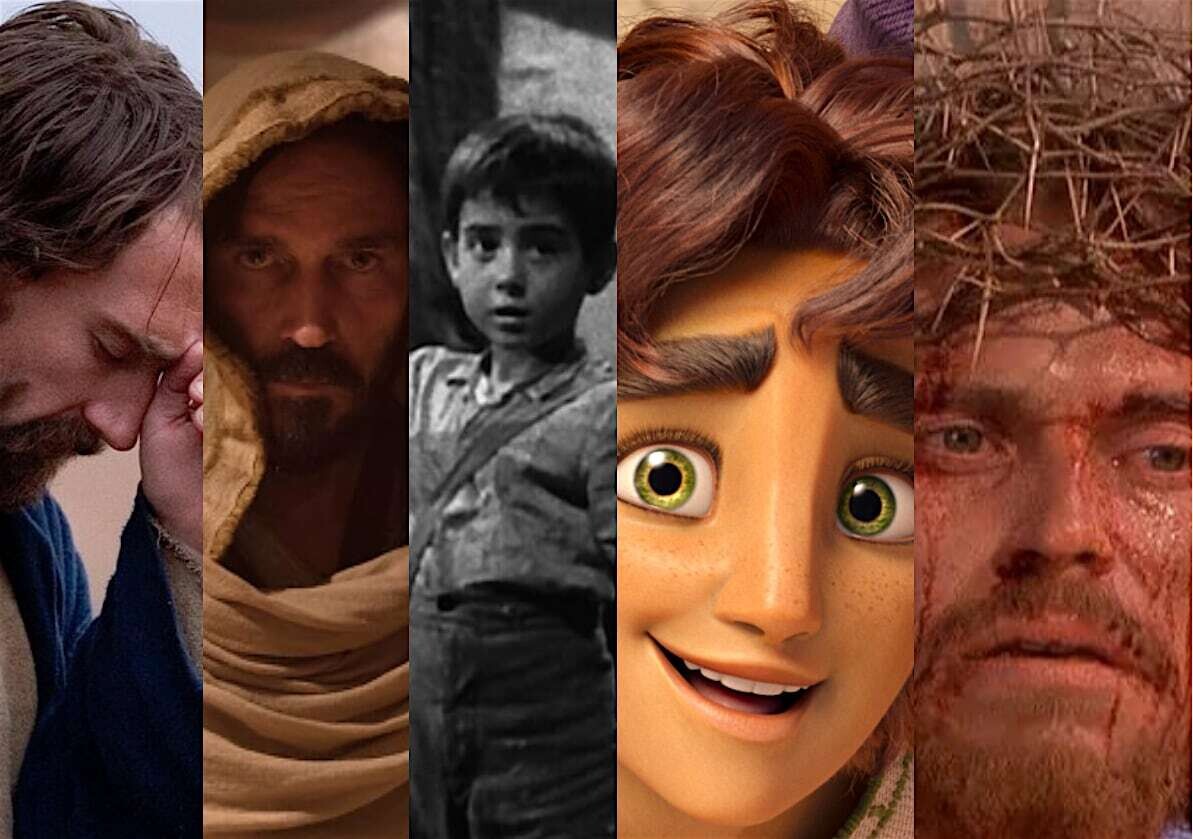
During Holy Week, screens on television and streaming platforms fill with stories that have touched faith, doubt, and spiritual search for decades. Cinema offers a wide range of works, from classic epics to provocative films that make the viewer reflect on the duality of the divine and the human.
One of the most prominent examples is Mel Gibson's "The Passion of the Christ." Its brutal realism and explicit scenes of suffering caused controversy upon release, but also cemented it as one of the most powerful portrayals of sacrifice. The film, shot in Aramaic, Latin, and Hebrew, immerses the viewer in the physical and spiritual agony of the protagonist.
A more human perspective on Jesus is presented in Martin Scorsese's "The Last Temptation of Christ." The film explores the internal conflicts, doubts, and even fears of the man considered the Messiah, offering a deep emotional and existential drama.
Equally famous is the satirical comedy "Monty Python's Life of Brian." The story of a man born on the same day as Jesus and mistakenly taken for the Messiah has become a cult classic. It criticizes fanaticism, blind faith, and society's tendency to create idols, even though it was initially perceived as offensive.
For family viewing, classics such as the Spanish film "Marcelino, Pan y Vino" (1954) are suitable. It tells the story of an orphan in a monastery who forms a touching bond with a crucified Christ figure, turning into a reflection on faith, doubt, and the human need to believe in something beyond the tangible world.
Other films, such as "Fátima" or "Paul, Apostle of Christ," offer different facets of religious themes. The former is based on the real events of Marian apparitions in Portugal, while the latter focuses on the final days of the Apostle Paul in Rome, showing the tension between power, faith, and fear.
Thus, cinema during Holy Week serves as a mirror for viewers. Some seek comfort and tradition, while others are ready to question everything and reinterpret it.