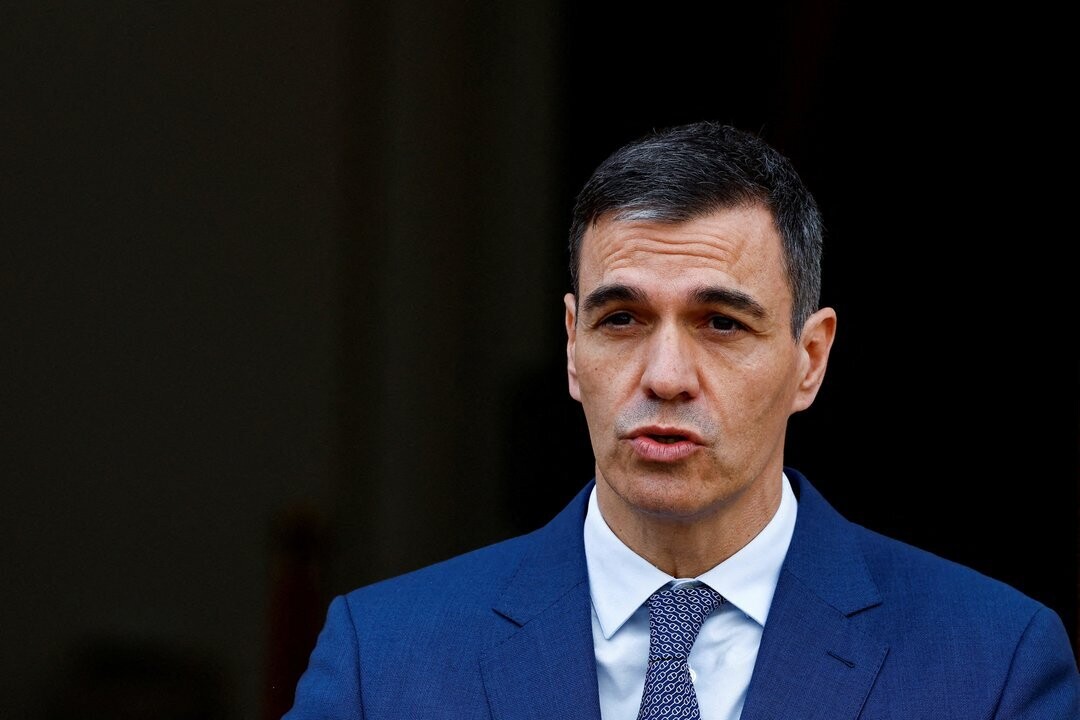
The President of the Government, Pedro Sánchez, paid tribute to the 'Spanish miracle' on Thursday, the 50th anniversary of the death of dictator Francisco Franco, and called for defending democracy at a time when some young people express nostalgia for an era whose legacy continues to divide the country. 'That November 20th not only marked the end of the last dictatorship in Western Europe. But also the beginning of a journey that was to lead us to recover freedom and prosperity and to reconquer the lost democracy,' Sánchez wrote in an op-ed published in the digital medium eldiario.es, where he stated that 'today's Spain is almost a miracle.' 'It is precisely now, when some idealize authoritarian regimes and cling to nostalgia for a past that never was, that we must step forward in defense of a freedom that was taken from us for so many years,' he continued. 'Democracy is our power. We must defend it,' the socialist leader stressed in a message published on X, learned the Argentine News Agency. This anniversary comes in a context marked by the rise in recent years of the far-right Vox party—a marginal force a decade ago and now the third political party—and by the manifestations of nostalgia for an era that some young people, influenced by social networks, have begun to idealize. According to a survey published on Thursday by El País, almost a quarter (24%) of young people aged 18 to 28 believe that an authoritarian regime can 'sometimes' be preferable to a democracy (compared to 12% among those over 61). Around 40% of those surveyed have a very good, good, or neutral image of Francoism, compared to 55% who have a bad or very bad image. This fracture has run through Spanish society for 50 years, divided between the will to rehabilitate the regime's victims and the desire not to 'reopen the wounds.' To the current climate of political polarization, the publication in recent days of the memoirs of emeritus King Juan Carlos I, Franco's designated successor, whose laudatory comments about the dictator caused much controversy, has been added. 'I think that in other countries there is a great consensus around a firm defense of the condemnation of the dictatorship (…) Here we have always had a right that has not been clear on this issue,' said the Minister of Culture, Ernest Urtasun, a member of the far-left Sumar platform, on public television on Thursday. An influential figure of the People's Party (PP, right-wing opposition), the president of the Madrid region, Isabel Díaz Ayuso, seemed to equate both sides of the Civil War (1936-1939) during her intervention on Thursday in the regional assembly. 'I learned from those Spaniards, parents and grandparents, who wanted neither one Spain nor the other, who belonged to that immense majority of Spaniards who never wanted the Civil War (…) and who today fear that we will return to the evils of 'civil war-mongering',' she stated. As every year, a few dozen nostalgics of the regime gathered on Thursday at Franco's tomb, now buried in a cemetery near Madrid after his exhumation from the mausoleum of the Valley of the Fallen (now Cuelgamuros) in 2019.