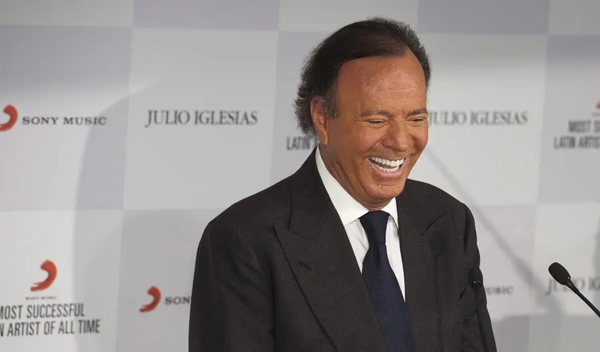
Former King Juan Carlos I acknowledged in an interview with France 3 that he made "mistakes", but said he does not regret his past and has no remorse or tries "not to have any", although if he could go back he would be more careful.
The emeritus king once again claimed his paternity of the Spanish Constitution, his key role in the democratic transition, his relationship with Francisco Franco, with his son Felipe VI, with his father Juan de Borbón and other historical figures, and answered telegraphically to questions about the economic and love scandals that marred the final part of his reign.
Juan Carlos I revealed in the interview that Francisco Franco knew of his democratic ambitions and that when he asked if he would help him in the future, the dictator replied that he would have to do it himself and that the only thing he asked of him on his deathbed was to maintain the unity of Spain.
The emeritus king also referred to the communist leader, Santiago Carrillo: "He was a true friend and a true collaborator".
From Abu Dhabi, where the interview was recorded, Juan Carlos I said that his greatest wish is for his son, Felipe VI, whom he described as a "good king" and with whom he maintains a "very good" relationship, to have "success and for Spain to be well governed", but he indicated that the country is in "a very difficult moment" due to the international political situation and "we have to support him".
And he confessed that he felt he was betraying his father when he accepted to be king, but of Juan de Borbón he highlighted that he was "a fantastic advisor and a friend afterwards", in his adult life.
From that final period of Francoism, the sovereign revealed that the Chilean dictator Augusto Pinochet asked him to continue "like Franco" when he died, but that he did "what the Spaniards truly wanted".
In any case, he hopes that the Spanish people will understand what he did.
He assured that they maintain a "very good" relationship and that he communicates with him.
Also asked if he had any remorse, the emeritus king said: "No, I try not to have any".
"I, really, have served Spain and the Spanish and sometimes I have not paid attention to my family.
On the path to democracy, he made a special mention of Cardinal Vicente Enrique de Tarancón, who helped him "a lot" with a speech in which he said "that one had to open up to the future", as well as to the former President of the Cortes (1975-1977), Torcuato Fernández-Miranda, and the President of the government (1976–1981), Adolfo Suárez.", continued the also director of the program "Secrets of History", whose last chapter is titled "Juan Carlos, Glory and Exile!"
"I never doubted" during the democratic transition, affirmed Juan Carlos I, who assured that the important thing during that period was "not to be afraid", "to move forward and to be brave".
"And remorse?". On his departure to Abu Dhabi, in August 2020, he explained that it was a matter of leaving his son "free" and "calm to do his job and reign", since if he had remained in Spain he believes that "perhaps I could have been an obstacle".
Returning to his abdication on June 18, 2014, the monarch considered that it was the best solution due to his physical limitations -"I can't imagine, especially in Spain, a king with crutches"- and because of his conviction that "it is always better to have a younger king".
Another key moment of his reign was the February 23, 1981 coup d'état, from which he highlighted his televised speech to defend the Constitution and give "a sense of security to the Spaniards".
"I hope they forgive me and that the Spanish people understand what I have done", said the monarch when taking stock of the most outstanding moments of his 39 years of reign (1975-2014), on the occasion of the publication in France at the beginning of the month of his memoirs "Reconciliation".
"I loved him very much, and I have a feeling that he has been with me since then", he added.
Asked if he had made mistakes, the king said: "All men make mistakes and everyone makes them", but when asked by the Franco-Luxembourgish journalist specializing in History, royalty and heritage Stéphane Bern if he regretted anything, Juan Carlos I answered with a curt "no".
He admitted, however, that he would like to "see him more and more often with his daughters, Princess Leonor and Infanta Sofia".
They did not have "a plan", he said, but together they tried "to do things right".
"I was always close to them and they really saw in me a leader", he said about his order to defend the constitutional order.
Questioned in a row about "if he had to do it again, would he be more careful?", he answered: "Yes, of course".
Asked if at any time he felt he was the object of rivalries between Franco and his father, Juan de Borbón, the emeritus king replied: "Yes, sometimes, I had the impression of being like a ping-pong ball".
Finally, he hopes to return, but says he is fine in Abu Dhabi, and it will depend "on the situation and the moment". "There was no civil authority. Then I could do it militarily (...) Because I really had moral authority over the military."