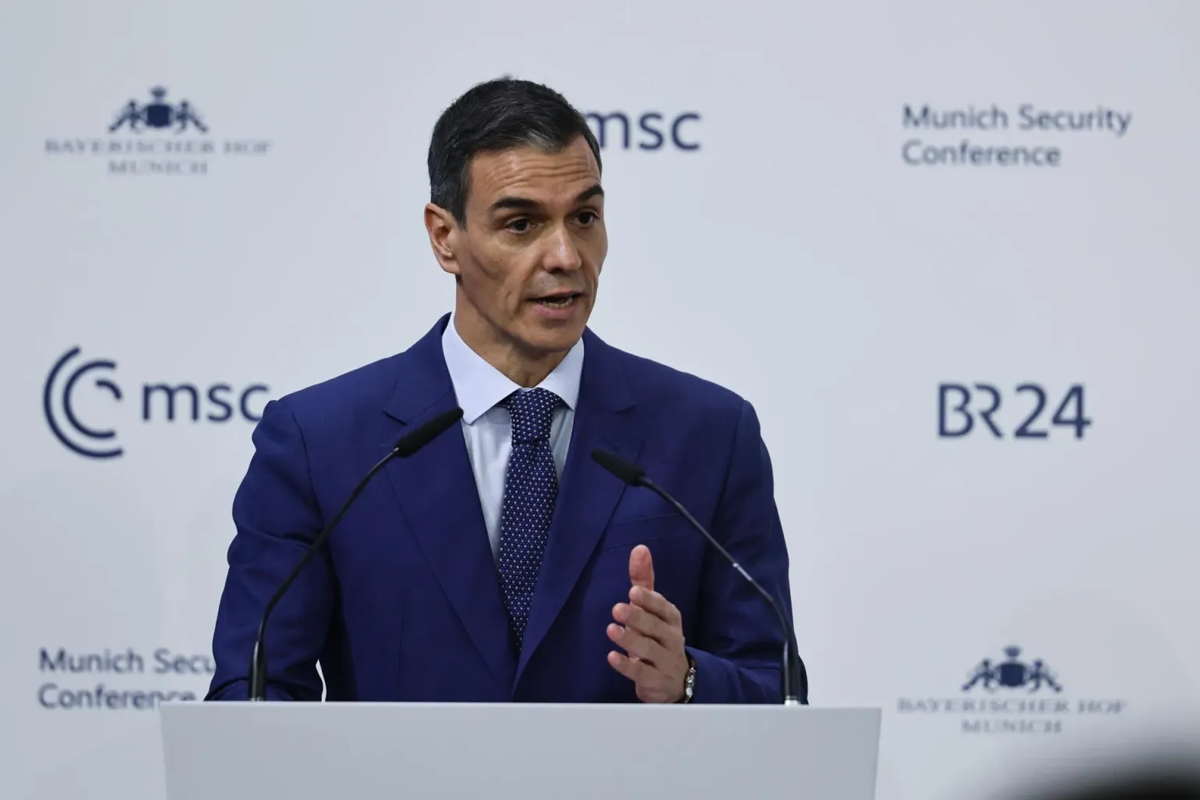
Spanish Prime Minister Pedro Sánchez called nuclear rearmament a 'historical mistake' on Saturday and urged nuclear powers to prevent a new arms race 'while it is still possible.' Sánchez made this call to nuclear powers during his speech at the Munich Security Conference, an annual event on geopolitics held since 1963. Sánchez, the first Spanish head of government to speak at the conference, reaffirmed Spain's commitment to the multilateral order and the security of Eastern European countries against the threat from Russia. He stressed the need for Europe to strengthen its defense capabilities to protect its freedom and way of life, but also to offer security guarantees to its international partners. According to the Prime Minister, since he took office, Spain has tripled its defense spending and doubled the number of personnel deployed in NATO missions. After advocating for sovereignty, territorial integrity, and security, he said he was firmly convinced that nuclear rearmament is not the path to follow. 'This is not a left-to-right issue, it is a matter of doing what is right,' Sánchez emphasized, suggesting that nuclear powers seem to have forgotten the lessons of the past and are expanding their nuclear arsenals again. Together, they are spending more than eleven million dollars an hour on nuclear weapons, he warned, and pointed out that experts estimate that the United States alone will invest 946 billion dollars in nuclear weapons in the coming decades. 'This is a historical mistake that we cannot repeat, especially today with the shadow that artificial intelligence casts, a shadow of uncertainty over the entire world,' he denounced. For this reason, he called on all these powers to put a brake on nuclear rearmament, sit down to negotiate, and sign a new START agreement to guarantee the continuity of the one that has just expired.