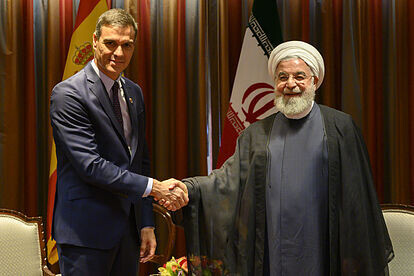
Amid a regional escalation pushing Arab Gulf governments and much of the West to explicitly condemn the Iranian regime for its missile and drone offensive, Spanish Prime Minister Pedro Sánchez chose a different path: he focused his speech on “de-escalation,” “international law,” and rejecting the military actions of the United States and Israel, but avoided placing the same blame on Tehran as other actors—including Muslim countries—now directly claiming to be attacked.
His government has relied for years on complex parliamentary alliances, and within Spain's left ecosystem, a narrative persists where direct criticism of Iran is often diluted under a discourse more concentrated on denouncing the U.S. and Israel, transforming into a pro-Iranian stance.
In this regional chorus, Spain finds itself in a singular position: it is active in trying to halt the war but reluctant to emphasize the responsibility of the Iranian regime in the spreading fire. The Sánchez government has a formal argument: it rejects an offensive without an explicit mandate from the multilateral system and maintains that an escalation could become “disastrous” for Europe. It condemns what allows it to reinforce its pro-European and supposedly legalist profile; it avoids what could trigger internal conflicts with its political ecosystem and a left that, by history and reflex, views Iran with less severity than the regime deserves.
And the question that arises is why, even when the Gulf—usually acting with calculation and prudence—calls Iranian attacks “inadmissible,” the socialist leader avoids an equivalent finger-pointing at Tehran and loads most of his condemnation onto the military actions of Washington and Tel Aviv. This prudence, which the executive presents as diplomatic coherence, is again read by the opposition and sectors of public opinion as a form of implicit support for a regime internationally marked by terrorism, repression, and violent projection in the region.
The difference in tone is clearly perceived when comparing the message from La Moncloa with the reactions of the Gulf Cooperation Council (GCC) countries. This shift fuels suspicions of political dependence: not because Iran currently finances the PSOE, but because part of the parliamentary and discursive scaffolding surrounding the government has a past—and an agenda—where Tehran is not treated for what it is: an aggressive regime towards its own population and the region.
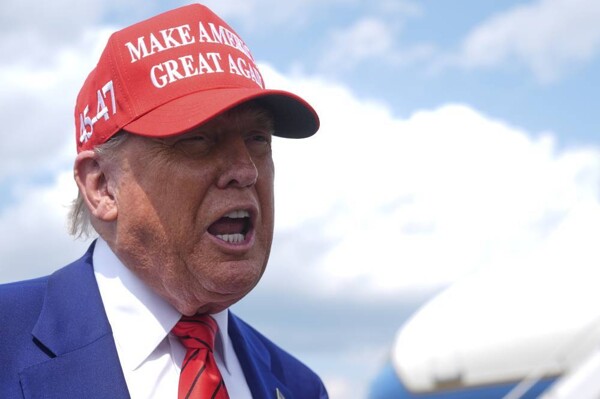
To this picture is added another flank that again bothers La Moncloa: the trade in products and technologies of “dual use.” Trump announced possible commercial sanctions against the Sánchez government.
Part of the answer lies in the power architecture that supports Sánchez. When it suits him, he condemns Iranian attacks (as the Spanish government officially did in 2024 after Iranian bombings of Israel), but for some reason quickly silenced this. The government maintains that its licensing policy is governed by strict controls and regulatory frameworks, but the public debate ignites for an obvious reason: in contexts of sanctions and proliferation, “dual use” is not a technicality; it is a risk. And when the executive calls for international firmness against escalation but is linked—even through licenses—to sensitive exports, its credibility erodes.
In short, Sánchez's “silence” is not absolute: it expresses itself as selectivity. In 2025, as part of judicial proceedings at the National Court, it became known that a company linked to that environment provided invoices related to Iglesias' work for that space. Although the PSOE is not judicially linked to Iranian financing, the political cost of displeasing partners—or former partners—with a history of having received Iranian money is high. But in the current climate of war and polarization, his emphasis shifts: condemnation is centered on the “unilateral action” of the U.S. and Israel, while regarding Iran, more generic, less personal, and less accusatory formulations appear.
However, the discussion is not just legal; it is political. Beyond the specific amount of those invoices, what is relevant is the picture: a future European political leader building notoriety and a platform on a connection to a theocracy that, at home, represses and persecutes, and abroad, finances or propels networks of influence. For years, around that relationship, accusations and documents multiplied, including the so-called PISA Report, presented in 2016 and amplified in the political debate.
The result of that tension is seen today in Sánchez's behavior: the PSOE leader moves like a tightrope walker. In that vein, El País reported that Sánchez decided to prevent the U.S. from using the bases in Rota and Morón for operations against Iran, citing a lack of international legal backing and absence of coverage from the UN or the U.S. Congress.
In recent hours, the GCC and area chancelleries have issued statements “condemning” Iranian attacks against sovereign territories and qualifying them as serious violations of international law. Saudi Arabia, for example, not only condemned the drone attack on the U.S. Embassy in Riyadh but described it as a “cowardly” and “brazen” act, reserving the right to respond. Qatar and the United Arab Emirates also issued official condemnation statements regarding Iranian attacks in the area and claimed their right to self-defense.
At this moment, when even the Gulf monarchies—far from being suspected of Western maximalism—are denouncing Tehran for indiscriminate attacks, the Spanish position is exposed: diplomatic prudence may be a virtue, but when it becomes systematic omission in the face of an aggressor, it begins to look like complicity.
The most documented—and politically toxic—connection revolves around HispanTV, a channel linked to Iranian state broadcasting, where Iglesias hosted and directed the program Fort Apache before the arrival of Podemos to power. At the same time, the executive insists that its priority is to protect Spanish citizens and avoid a major clash. The “low profile” regarding internal Iranian repression or regional aggression can be read, within that map, as a signal not to break bridges with sectors that still gravitate around the parliamentary majority and the coalition climate.
Here appears the most sensitive point: the history of controversies involving Podemos, its founder Pablo Iglesias, and the Iranian media apparatus in Spain. Recent journalistic reports, based on official foreign trade data, pointed to Spanish authorizations or exports of these types of goods to Iran in recent years.