In times of conflict, naval forces often play a significant role in the evacuation of citizens and civilian personnel from at-risk zones. The Eastern Mediterranean has served on several occasions as a key point for this type of operation, especially when political or military instability makes it necessary to relocate foreign citizens. The presence of military vessels with logistical and medical capabilities allows for rapid action in an emergency. At-sea replenishment allows for the transfer of fuel, food, and other essential resources while vessels continue their mission. Contemporary naval logistics is a key factor in international operations, especially when coordinating multinational deployments involving different navies.
The Mediterranean as a strategic scenario The Eastern Mediterranean has consolidated in recent decades as one of the most relevant regions from a geopolitical point of view. The Spanish Navy has participated in numerous multinational missions in the Mediterranean and other strategic areas over the last few decades. These operations include maritime surveillance, anti-piracy efforts, control of illegal trafficking, and support for peacekeeping missions. The deployment of the Cristóbal Colón demonstrates Spain's ability to contribute with advanced assets to international security operations.
In coordination with ships from the Greek Navy and other allied units, this deployment aims to strengthen air defense and improve the capacity to react to potential threats arising from the conflict taking place in the Middle East.
A naval deployment in a period of high regional tension The dispatch of naval forces to the Eastern Mediterranean is due to the increase in security threats in that strategic area. Cyprus, situated in a crucial enclave connecting Europe, Asia, and Africa, has become a focus of military and diplomatic attention amid the growing regional climate of tension. The incident that precipitated the announcement was the impact of an Iranian-made drone on the British base of Akrotiri, located in Cypriot territory. The mission, communicated by the Ministry of Defense, takes place after a drone attack that hit military installations in Cyprus, an event that increased concern about the stability of the area. The Spanish frigate will join the naval group led by the French aircraft carrier Charles de Gaulle, considered one of Europe's main military platforms.
Through joint exercises and coordinated patrols, different countries strengthen their ability to act in an integrated way in real crisis situations. Advanced training at sea also allows for the evaluation of combat systems, communication protocols, and response strategies against different types of threats.
Support for evacuation and civilian security operations In addition to its military functions, the Spanish frigate will also be prepared to participate in humanitarian operations if the regional situation requires it. This allows for the integration of its operations within multinational missions, such as the one currently led by the French aircraft carrier Charles de Gaulle.
Military cooperation between European allies The mission in which the Spanish frigate will participate demonstrates the level of cooperation maintained by the armed forces of various European countries. The naval group led by the French aircraft carrier is configured as a combined force integrating military capabilities from multiple nations to act in potential crisis situations. The Charles de Gaulle, flagship of the French Navy, functions as the naval group's operations center. These operations are usually coordinated with diplomatic authorities and international organizations to ensure the safety of civilians. In this sense, the mission of the Cristóbal Colón also includes providing support for possible evacuation operations, in addition to contributing to the safeguarding of the region's air and maritime space.
Logistics and support during naval deployment Long-duration naval operations require a complex logistical support network to ensure the continuous operation of deployed vessels. In this context, Spain has decided to send one of its most advanced ships to support air defense and regional protection operations. The Spanish government's decision to send the frigate Cristóbal Colón to the Eastern Mediterranean is part of a coordinated strategy with its European partners to reinforce security in a region that is particularly delicate from a geopolitical perspective. It also reflects the importance of cooperation between European countries in a global context characterized by increasingly complex challenges. The operation in the Eastern Mediterranean will be carried out alongside allies within an international collaboration framework aimed at maintaining regional stability.
As the geopolitical dynamics in the Middle East evolve, the presence of European naval forces in the region will continue to play a significant role in preventing new escalations and safeguarding strategic infrastructure. The Cristóbal Colón frigate becomes a key piece within the collective effort to guarantee security in one of the most sensitive areas of the current international landscape. From this platform, the air and maritime operations of all deployed units are coordinated. The Greek ships that are part of the group provide regional knowledge, as Greece maintains a constant naval presence in the Eastern Mediterranean. Spain's participation adds additional air defense and escort capabilities. This type of multinational deployment aims to improve the operational readiness of the participating forces.
Its location connects trade routes, energy interests, and military alliances involving multiple international actors. In addition to tensions derived from conflicts in the Middle East, the area also concentrates disputes related to energy resources, delimitation of exclusive economic zones, and control of maritime routes. For European countries, maintaining an active presence in this region is fundamental to protect their strategic interests and guarantee the security of their allies. The dispatch of naval units, including the group led by the Charles de Gaulle, is part of a broader strategy aimed at deterring potential threats and maintaining stability in the region.
Spain's commitment to European security Spain's participation in this mission reinforces its role within European defense initiatives and joint operations with international allies. The increase in tensions in the Middle East has led several European countries to reinforce their military presence in the Mediterranean. This type of vessel is specifically designed to resupply other units at sea. Thanks to these capabilities, combat ships can remain for extended periods far from their bases without needing to return to port. Fuel, supplies, and technical maintenance are essential elements to maintain the operational capability of fleets. In this case, the Cantabria supply vessel is scheduled to depart in the coming days to offer logistical support to the naval group during its transit through the Strait of Gibraltar. The deployment of the Spanish frigate is part of this joint work aimed at safeguarding its allies and fostering stability in the Mediterranean area. Spain's presence is also understood as a demonstration of its commitment to European collective security, especially regarding the protection of the bloc's eastern border.
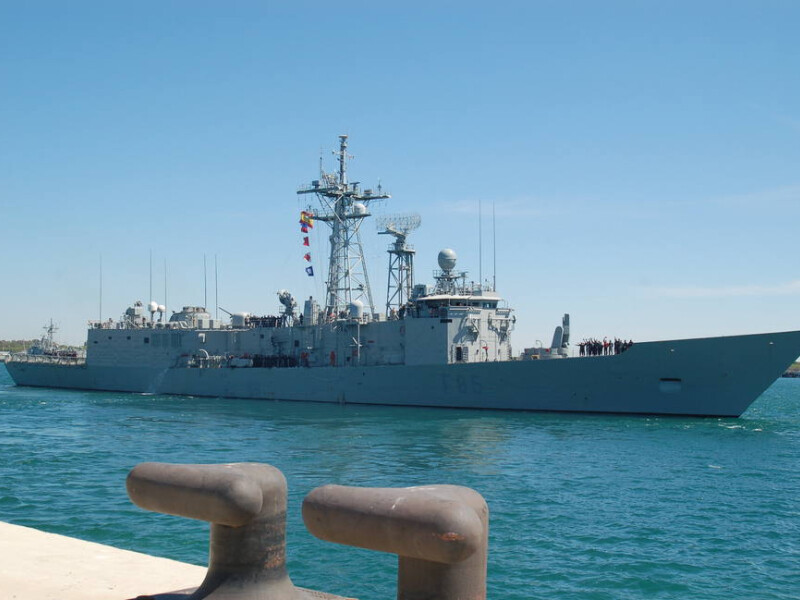
The Cristóbal Colón frigate and its technological capabilities The Cristóbal Colón is considered one of the most technologically advanced units in the Spanish Navy. This ship is part of the F-100 class, designed for air defense missions and complex naval operations. Its combat system integrates advanced technology capable of identifying, tracking, and neutralizing air and maritime threats at long range, and thanks to these resources, the frigate assumes an essential role in protecting other naval units operating within a battle group. In addition to its defensive functions, the Cristóbal Colón is also enabled to intervene in patrol, escort, and maritime surveillance tasks, which take on special relevance in areas at risk of attacks by missiles, drones, or other contemporary warfare resources. The ship also has advanced communication and coordination systems that facilitate interoperability with other NATO and allied country naval forces. Although the authorities have not fully detailed the consequences of the attack, the fact was interpreted as a reminder of the volatility of the situation in the region. In this context, the European Union and various member states have intensified their coordination on defense matters.