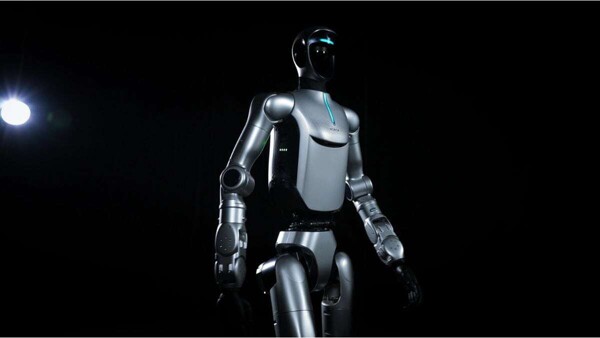
During its presentation in Barcelona, the robot interacted with figures such as King Felipe VI, reflecting the global interest this new category generates. HONOR is not just entering robotics: it is betting on changing the relationship between people and technology. Today, at the Mobile World Congress 2026, that vision is already a reality. What began as a clear strategy—with multidisciplinary teams and specialized labs—now translates into tangible technology, built under a philosophy of unprecedented precision, consistency, and evolution. The key announcement came during the Mobile World Congress 2025 (Alpha Plan), followed by MWC 2026 (Humanoid Robot), where HONOR presented its “Alpha Plan,” backed by a $10 billion investment in artificial intelligence. With its foray into robotics, the company not only expands its portfolio but also redefines its ambition: to move from a smartphone manufacturer to a leader in AI ecosystems with a physical-world presence. It all started a year ago with the development of its humanoid robot and the presentation of the “Alpha Plan” at the Mobile World Congress 2025. All under the concept of “Augmented Human Intelligence,” where technology empowers the user without replacing them. The public debut also had symbolic impact. Unlike developments like Tesla Optimus or Atlas, focused on industry, HONOR is targeting the consumer directly. The humanoid robot developed by the company combines advanced physical capabilities with adaptive intelligence. The global market supports this bet: domestic robots are expected to exceed $11.7 billion in 2026, while humanoids could reach $38 billion by 2035. In tests, it has achieved stability, efficient movement, and execution of complex maneuvers. The roadmap seeks to evolve into an integrated ecosystem, where devices, platforms, and innovation centers converge in a single vision. In that context, humanoid robotics appears as a strategic piece. These abilities were publicly showcased at the Mobile World Congress 2026, where the device amazed by performing choreographies alongside humans, including the popular “moonwalk” and high-difficulty jumps. But beyond the hardware, the true differentiator is HONOR's state-of-the-art software, which evolves into a system capable of learning, anticipating, and adapting. However, the current proposal seeks something different: integrating these capabilities into daily life, solving the “last mile” of human-machine interaction through natural language. From WABOT-1 in 1973 to ASIMO in 2000, the progress has been constant. The tech company HONOR is writing a new chapter in its history. The result is an assistant that not only responds but understands the user's context and preferences. The evolution of this type of technology has important precedents. It can accompany daily activities, facilitate shopping, manage reminders, or support work tasks. The challenge now will be to scale the proposal and demonstrate that the future is not only carried in the pocket but also walks alongside the user. In practice, the device is designed as a comprehensive assistant.

HONOR Unveils Its Humanoid Robot at MWC 2026
Tech giant HONOR unveiled its new humanoid robot at the 2026 Mobile World Congress in Barcelona. The company is investing $10 billion in robotics and AI, aiming to create an ecosystem where technology empowers rather than replaces humans. The robot demonstrated advanced physical and intellectual capabilities, heralding a new era in consumer robotics.