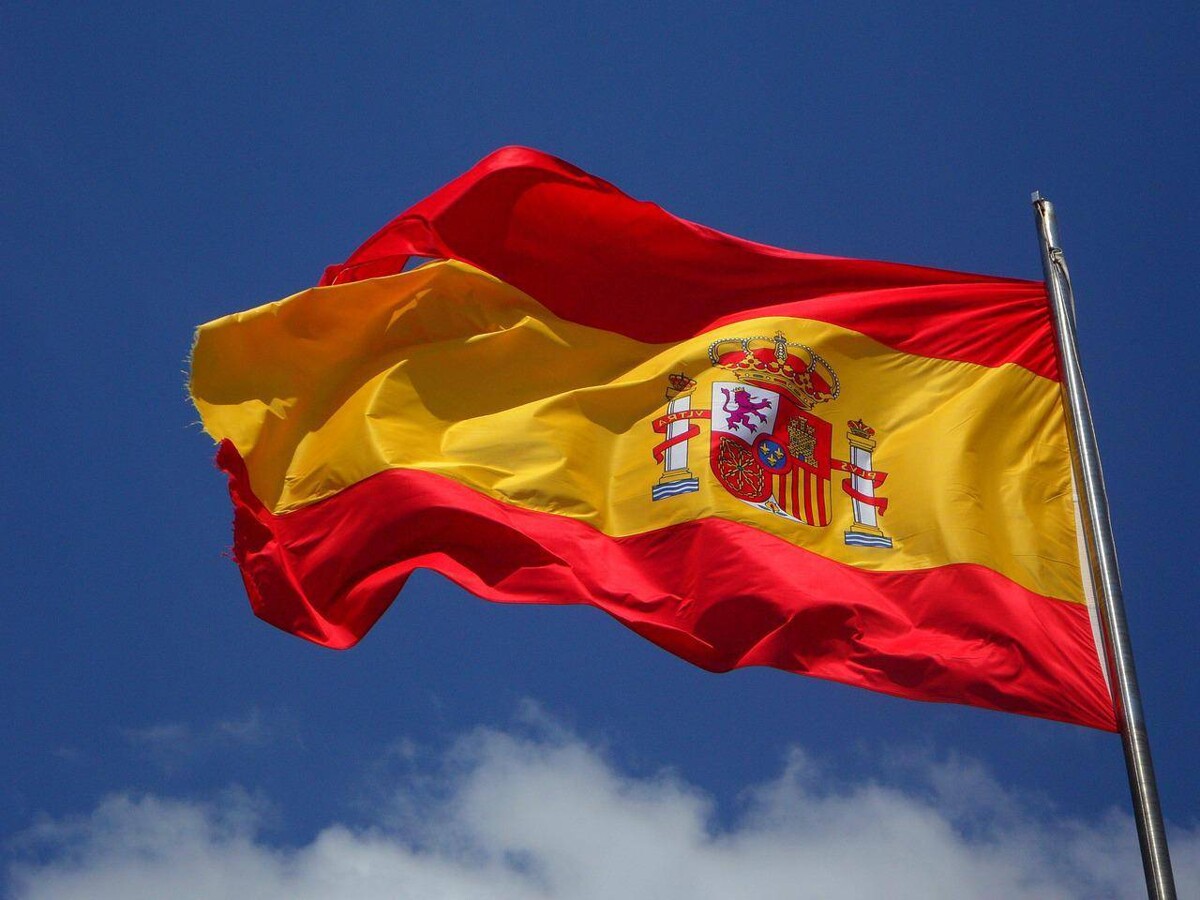
The Spanish government has formalized the departure of its ambassador to Israel, Ana María Salomón Pérez, and left its diplomatic representation in Tel Aviv at the level of chargé d'affaires. This decision, published in the Official State Gazette, reflects the deep deterioration in relations between Madrid and the government of Benjamin Netanyahu. The measure means that the Spanish embassy in Israel will remain without an ambassador and will be led by a chargé d'affaires, a lower diplomatic rank usually used when political ties between two countries are going through a tense period. It also leaves an open question that the government of Pedro Sánchez will sooner or later have to answer: if its foreign policy is guided by a uniform criterion or if the Iranian regime will continue to be an exception. Spain's decision sends a clear signal to Israel. For many observers, Madrid's gesture towards Israel inevitably reopens the debate on the yardstick with which the Pedro Sánchez government measures the different actors of the regional conflict. The question now being asked in European diplomatic and political circles is whether the Spanish Executive will apply the same level of institutional pressure against Tehran as it has just exercised against Israel, or if relations with the Iranian regime will continue to follow a more cautious track. In a region traversed by war and confrontation between powers, every diplomatic gesture has a clear political weight. The decision was approved at the last Council of Ministers and formalizes a situation that had in practice been maintained since September 2025, when the diplomat had been called for consultations and remained in Spain. This diplomatic move is also interpreted as a gesture of reciprocity. Israel has not had an ambassador in Spain since 2024, when the Israeli government decided to call its representative in Madrid for consultations after Spain officially recognized the Palestinian state. The participation of Iglesias in programs broadcast by HispanTV, the state Iranian channel that received large sums of money, was the subject of public debate and fueled suspicions about the political and ideological closeness between sectors of the Spanish left and the ayatollahs' regime. Although discussions about supposed political funding from Iran generated intense political and judicial confrontations in Spain, the truth is that the media and political relationship between leaders of Podemos and communication structures linked to the Iranian state was installed for years as a topic of controversy in Spanish politics. That is why the departure of Ambassador Salomón is not interpreted solely as an administrative or diplomatic issue. Since then, the Israeli representation on Spanish territory has been headed by the chargé d'affaires Dana Erlich, without a new ambassador being appointed. The decision of Pedro Sánchez's government places Spain once again in a particularly delicate position within the Middle Eastern diplomatic chessboard, at a time when the region is experiencing one of the most serious military escalations in recent years. The downgrade of diplomatic relations with Israel is interpreted by analysts as a political gesture towards Jerusalem, but it also opens a debate on the coherence of Spanish foreign policy towards other actors in the conflict. In this context, a question that is beginning to gain strength in European political and diplomatic spheres emerges: if the Sánchez government is willing to adopt an equally firm stance against Iran, a regime accused of supporting regional armed groups and playing a central role in the current crisis in the Middle East. The question takes on greater weight in Spain due to the controversies that for years surrounded left-wing leaders linked to Podemos, including its founder Pablo Iglesias, a former political partner of Sánchez's PSOE during the coalition government stage. Madrid, March 11, 2026 - Total News Agency - TNA -