This slowdown contrasts with the dynamism of the market: this September, Spain reached its all-time high in active population, surpassing 25 million people.
Educational Level Young Spaniards constitute the segment of the workforce that has most raised its educational level in the last 11 years (2014-2025). Asempleo believes that the quality of youth employment will be the main labor challenge Spain will face in 2026, which suffers from a "growing mismatch" between the training acquired and the available vacancies, as reflected in the fact that currently, three out of every 10 young people under 25 are employed in sectors such as hospitality (16.6%) and commerce (16.2%).
This is highlighted in the monograph 'Youth and Labor Mismatch' published this Monday by Asempleo, the employers' association for employment agencies and temporary work companies, which warns that the "mismatch between job offers and youth training is generating a 'scenario of frustration and vulnerability for the best-educated generation in our history'."
Faced with this reality, Asempleo makes an "urgent call" for investment in active employment policies that offer a real response for young people, as the current configuration of the Spanish economic structure generates a "vicious circle".
Young people under 25 with higher education have gone from around 340,000 in 2014 to nearly 620,000 in 2025.
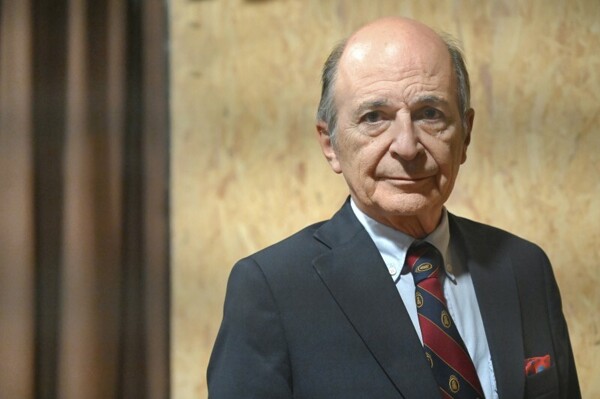
"This situation causes persistent mismatches between training and actual employment, and explains, in part, the higher incidence of overqualification, underutilization of skills, and structural youth unemployment, which continues to be one of our country's main burdens," highlights the president of Asempleo, Andreu Cruañas.
A third of young people are no longer looking for a job, but not for the reason you think: "There are too many options" Lucía Puerto More than half of Generation Z now finds it harder to find a job than last year, to the point that nearly 30% consider not trying due to the complexity of the market.
Furthermore, this employers' association expresses its "concern" that among young people under 25, only 55.6% believe their level of studies matches their job, while 34.9% state they have a higher education than required.
In Cruañas' opinion, this shows that "initial labor insertion continues to be characterized by predominant access to sectors and occupations with low training intensity. 29.2% of young people aged 16 to 34 are overqualified for their position, a figure that rises to 35% among those under 25."
The situation is even more critical for those who, after a first work experience, have become unemployed: in this group, the overqualification rate reaches 41.1%, confirming that the first contact with the labor market is often a "revolving door to positions that do not require the acquired training," the Asempleo study deepens.
Technological Wall To this scenario of precariousness is added a new "technological wall," as artificial intelligence (AI) "is breaking the traditional access to the labor market."
Specifically, it indicates that while investment in higher and vocational education grows, "this reality clashes with a wall of low-intensity job offers, which prevents the consolidation of stable and well-remunerated professional trajectories."
Asempleo's analysis points out that although sectors like hospitality or retail sales have traditionally been "gateways to the labor market" for those under 25, it is a concern that the evolution towards higher-quality jobs is stagnant.
We are facing a systematic underutilization of human capital with serious long-term economic and social costs.
Spain cannot afford its youth, after years of academic effort, to be forced to compete for positions that do not value their qualification.
The friction between training and the type of job performed opens an early phase of skills assessment that especially affects young people newly incorporated into the workforce."
And then we wonder why young people vote for Vox Nacho Cardero The future of our youth, more than a promise, is now a threat: inaccessible housing, meager wages, a cooling labor market, social networks colonizing their perception of the world, mental health tearing them apart.
Consequently, it warns that "the reality behind the figures reveals an alarming qualitative precariousness."
Recent data from the Organisation for Economic Co-operation and Development (OECD) reflect that youth inactivity represents a significant burden on potential talent in several OECD countries.
In nine economies —including Spain, Colombia, Costa Rica, Greece, Italy, Korea, Lithuania, Mexico, and Turkey— more than 15% of young people are in the category of "neither studying, nor working, nor receiving training," the known as 'Ninis'.
"This places Spanish youth in a perfect storm: having more studies no longer protects against automation but, paradoxically, increases the risk," Asempleo continues.
"It is imperative to reorient employment policies so that labor demand matches the training offer," Cruañas concludes.
Source: El Confidencial
The AI challenge intensifies when observing the behavior of large corporations, precisely where qualified young people should find their best opportunities.
Investing in young people is profitable: the new strategy that is starting to show results Javier Jorrín The first experiences of the new training and youth support policies are showing an improvement in labor insertion and the quality of contracts.
"The improvement in the unemployment rate in recent years must not hide the great challenge of quality. In this line, the International Monetary Fund (IMF) warns that in advanced economies like the Spanish one, up to 60% of employment is exposed to AI."
"This situation causes persistent mismatches between training and actual employment and explains, in part, the higher incidence of overqualification, underutilization of skills, and structural youth unemployment, which continues to be one of our country's main burdens," highlights the president of Asempleo, Andreu Cruañas.