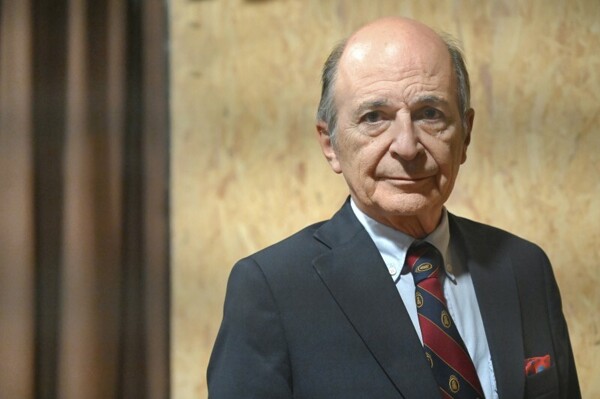
Former Italian Prime Minister Mario Draghi presented a report to Ursula von der Leyen in September 2024, discussing European competitiveness. He stated that Europe lacks an environment that fosters innovation, flexibility, and value creation, proposing that these issues be addressed as urgent. Another major problem is that the European Union lacks a transnational vocation; its goal is to be a union of countries and cultures, yet all its partners are very different. Large multilateral bodies, like NATO or the WTO, face the challenge that they were organized based on a specific geopolitical context, which has since changed. Despite the government potentially facing problems in six months in demonstrating how the money was spent, an expert believes that a change in government could lead to worse outcomes. As inequality grows, the current government controls social protest and maintains strong ties with unions, a new administration would lose this advantage and might uncover several uncomfortable 'skeletons in the closet.' The expert also commented on the failed merger between BBVA and Sabadell, noting that Spain has a regulator responsible for approving such mergers. Despite the political troubles of the socialist government, the economy shows good results: macroeconomic indicators are the best in a long time, with a record number of tourists, which is key for the Spanish economy and leads to record tax revenues. However, despite this record, a structural deficit persists, aligning with European estimates, along with structural issues like rising pension spending, increased public expenditure, and the lack of a general budget. The Minister of Finance, María Jesús Montero, stated that revenues will increase by 8% this year, implying tax hikes such as VAT, which places a greater burden on the middle class. This illustrates that while macro numbers are good, the government has not done its homework on spending, which is why inequality is on the rise. The expert also noted that the economy is increasingly dependent on European funds, especially after the pandemic. Just as Vladimir Putin's invasion of Ukraine convulsed the region in 2022, Donald Trump is now doing the same with Greenland, opening a new front of tariff and political tensions between Washington and Brussels. Luis Garvía Vega, a finance doctor from ICADE and a permanent observer of the economic impacts of these geopolitical tensions, analyzes the future of the EU in light of Trump's advances, the current state of the Spanish economy, and is skeptical that a political change is the answer to Pedro Sánchez's management. He also commented on the complexity of the current situation triggered by the US intention to control Greenland, especially regarding tariffs, noting that the problem with Trump's tariffs is that they are paid by the US citizen. The expert believes Trump has humiliated Europe, putting it in an awkward position that forces it to look in the mirror and shift its focus away from the US, pushing it toward other markets like Asia or Mercosur. He also pointed out Europe's significant problem of making decisions unanimously, which leads to slow processes. For example, the treaty with Mercosur will likely not be ratified for another 10 years, as a single country can block everything. The expert also commented on the BBVA-Sabadell merger, noting that the regulator approved it, but then the government intervened with public consultations and imposed conditions that ultimately scuppered the deal for political reasons. When asked about Italy's prospects, the expert noted that Germany will always be Europe's engine despite its problems. Italy has structural issues similar to Spain's, but Giorgia Meloni has handled politics well—that is the difference. Spain could keep pace with Italy, but the problem is political. In his view, Europe is at a new critical juncture in its history.